Cultural Symbol & Athletic Design
Aussie kangaroos have been woven into Australian identity for generations—from national crests and coinage to regional sports mascots, road signs, and stories across the country.
Biologically built for distance and efficiency across open country, kangaroos rely on powerful hind tendons, large feet that act like springs, and a thick tail for balance and leverage. Depending on terrain and pace, they can cruise at over 48 km/h and cover up to 9 metres in a single bound.
Population & Outback Habitats
Across open plains, bushland, and coastal fringes, kangaroos gather in social groups called mobs—typically made up of adult males (“jacks” or “boomers”), females (“jills” or “flyers”), and young (“joeys”).
- Booms with rainfall: Kangaroo numbers fluctuate significantly with seasonal rains and pasture growth across Australian grasslands and bushland.
- Historical benchmark: In 2016, Australian government estimates placed kangaroo numbers around 45 million—roughly double Australia’s human population at the time.
- Boxings & dominance: Males often box or wrestle on their hind legs to establish hierarchy or compete during mating interactions—not to put on a show for visitors.

From Giant Kangaroos to Tree Kangaroos
Kangaroos are just one branch of the wider macropod family in Australia, which spans dramatic differences in size and habitat:
- Large kangaroos: Tall male kangaroos (such as red and eastern grey kangaroos) can reach roughly 6 ft 7 in (around 2 metres) tall when standing upright and weigh up to 90 kg (200 lb).
- Wallaroos: Intermediate in build between large kangaroos and smaller wallabies, often favouring rocky hills, escarpments, and woodland edges.
- Small wallabies: Compact macropods suited to dense scrub and undergrowth—such as the dwarf wallaby, measuring around 46 cm long and 1.6 kg.
- Tree kangaroos: Medium-sized climbing macropods found in the tropical rainforests of far northeastern Queensland, adapted with strong forelimbs and curved claws for life in the canopy.

Where to See Kangaroos
Kangaroos rest in the shade during hot midday sun and become far more active grazing in the cooler hours of early morning and late afternoon. Top destinations and guided routes include:
- Grampians & western plains: Watch open grassy clearings around dawn and dusk on a 2 Day Great Ocean Road and Grampians Tour.
- Tower Hill & coastal bush: Spot kangaroos alongside koalas and emus at Tower Hill Wildlife Reserve or see wild Great Ocean Road koalas on a 1 Day Great Ocean Road Tour.
- Phillip Island & islands: Explore native habitats across Phillip Island or travel further afield to Kangaroo Island on our Kangaroo Island Tour.
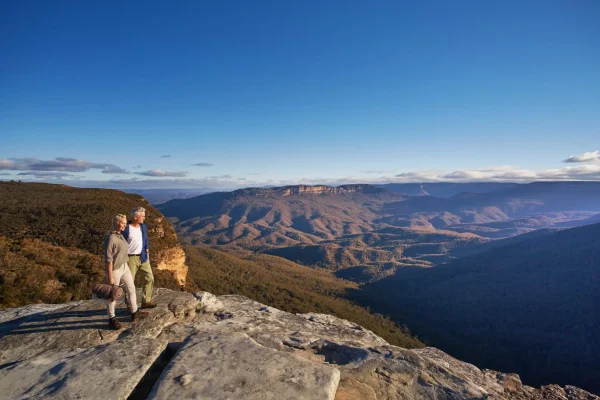
- Blue Mountains & eastern ranges: Combine rugged sandstone valleys and wildlife encounters through Blue Mountains or join a 1 Day Blue Mountains Tour from Sydney.
Staying Safe Around Wild Kangaroos & Trying Local Cuisine
While Aussie kangaroos look charming from a distance, wild animals are unpredictable and should never be approached or provoked. Never try to challenge or corner a kangaroo—large males and mothers protecting joeys can deliver severe kicks with their hind legs or scratch with sharp claws, and dusk drivers should stay alert for wildlife crossing rural roads.
For close, calm encounters and supervised wildlife experiences, visit accredited sanctuaries and wildlife parks. And for adventurous foodies who eat meat, kangaroo steak—often paired with a bold Australian red wine—is widely available on restaurant menus across Australia as a lean, distinctly local culinary option.
Frequently Asked Questions
How fast and how far can an Aussie kangaroo jump?
Kangaroos can travel at over 48 km/h and cover up to 9 metres in a single bound, using their large hind feet and muscular tail for propulsion and balance.
How big do kangaroos get compared to wallaroos and wallabies?
Large adult male kangaroos can stand around 6 ft 7 in tall and weigh up to 90 kg. Wallaroos sit in between kangaroos and wallabies in size, while small species like the dwarf wallaby weigh around 1.6 kg and measure about 46 cm long, and tree kangaroos inhabit northeastern Queensland rainforests.
Can wild kangaroos be dangerous?
Yes. Wild kangaroos are not domestic pets and can kick forcefully with their hind legs or lash out if threatened, cornered, or approached too closely—especially large males or females with joeys. Always keep a respectful distance and observe from a safe spot or accredited wildlife park.
What is a group of kangaroos called?
A group of kangaroos is called a “mob,” commonly made up of adult males (jacks or boomers), females (jills or flyers), and young (joeys).
See Australian Wildlife in the Wild With Local Guides
Explore iconic Victorian and Australian landscapes with experienced guides who know where and when to spot native wildlife safely.