
The History of Cahills Crossing
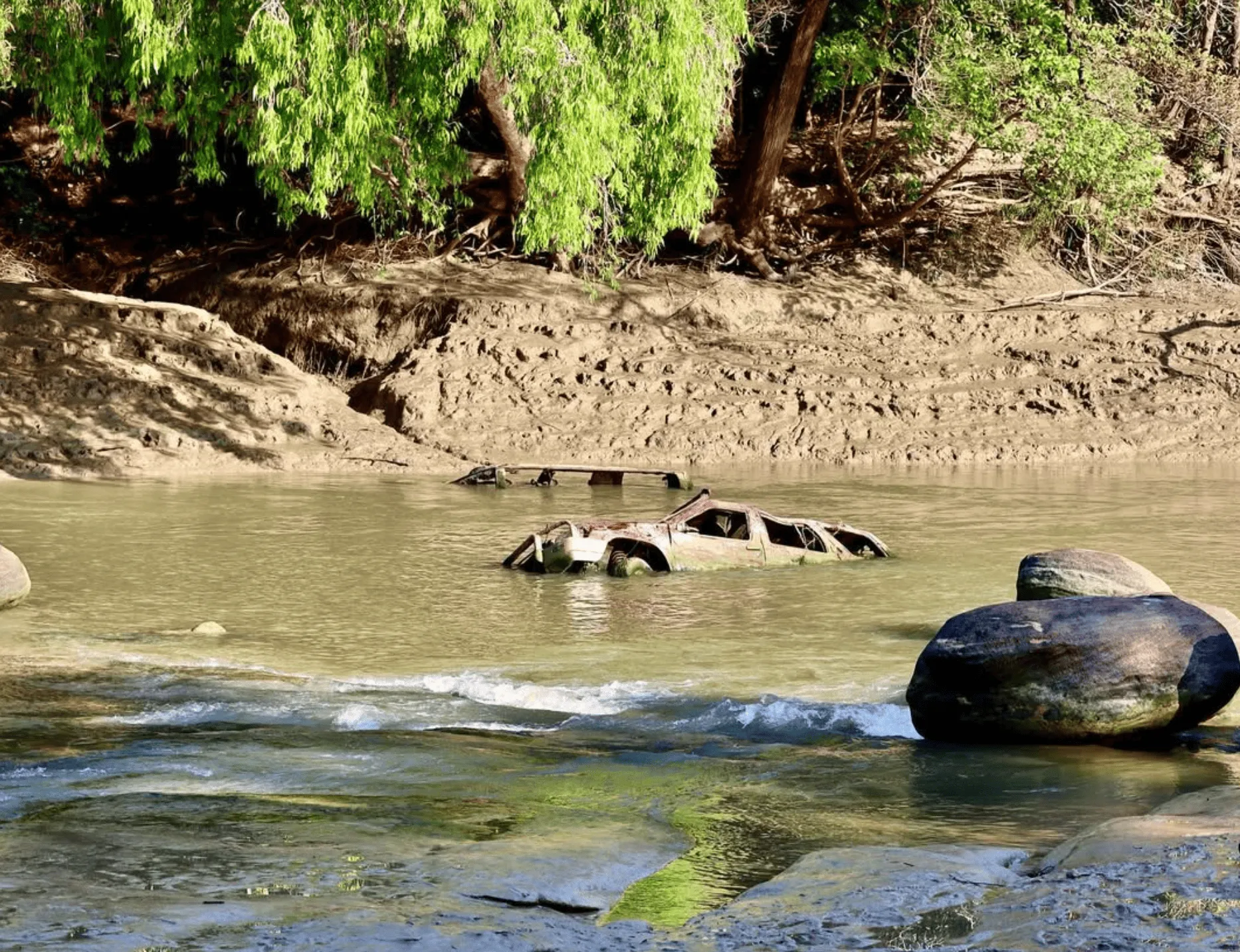
Named after buffalo hunter and early pastoralist Paddy Cahill—who established a settlement across the river at Oenpelli (Gunbalanya) in the early 20th century—the rock bar and concrete causeway at Cahills Crossing were developed in the 1960s to provide a dry-season road link between Kakadu and West Arnhem Land.
Long before modern vehicles arrived, this shallow river bar served as a vital seasonal crossing, fishing ground, and meeting place for the Bininj and Mungguy traditional owners.
Wildlife at Cahills Crossing
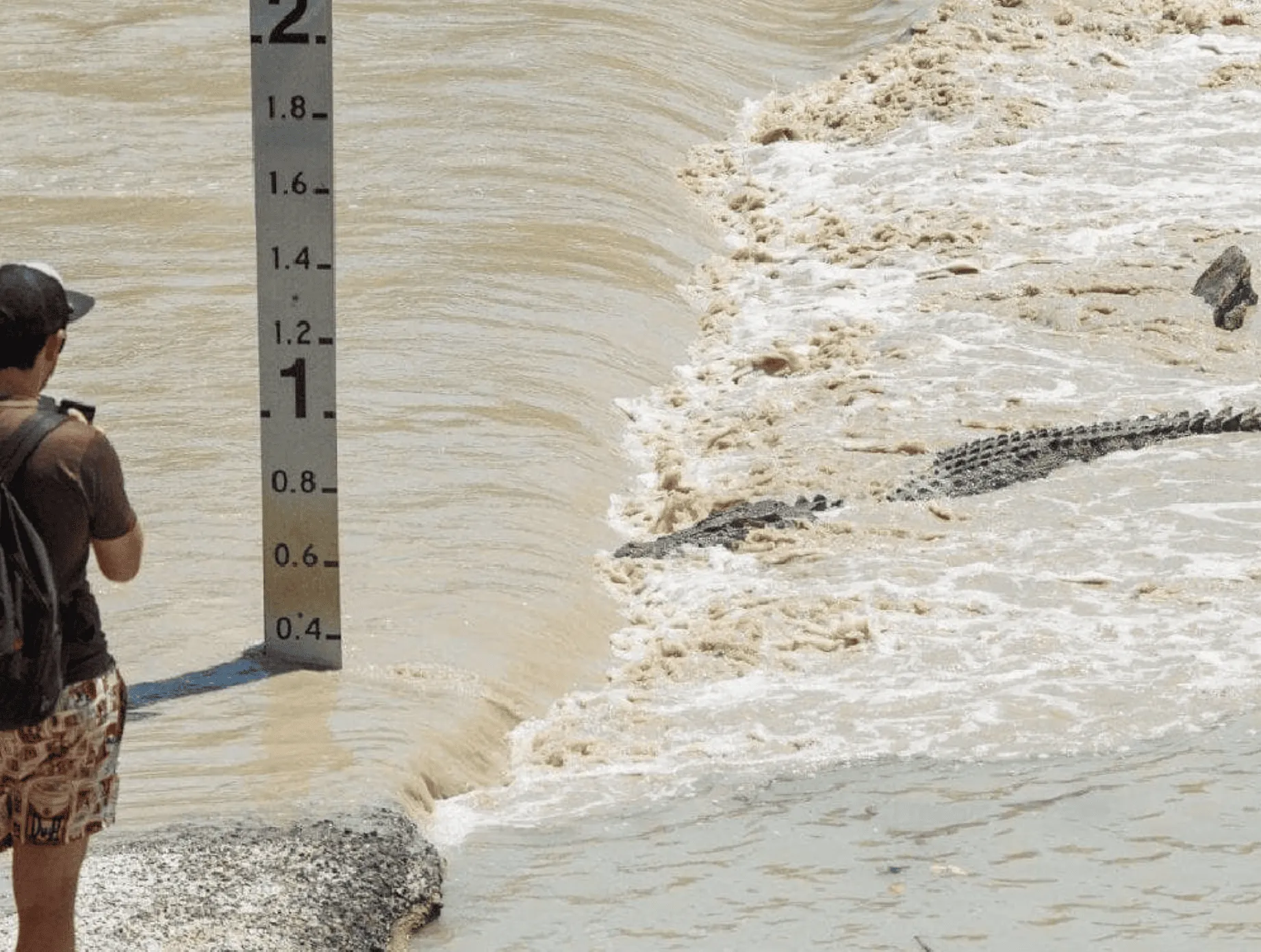
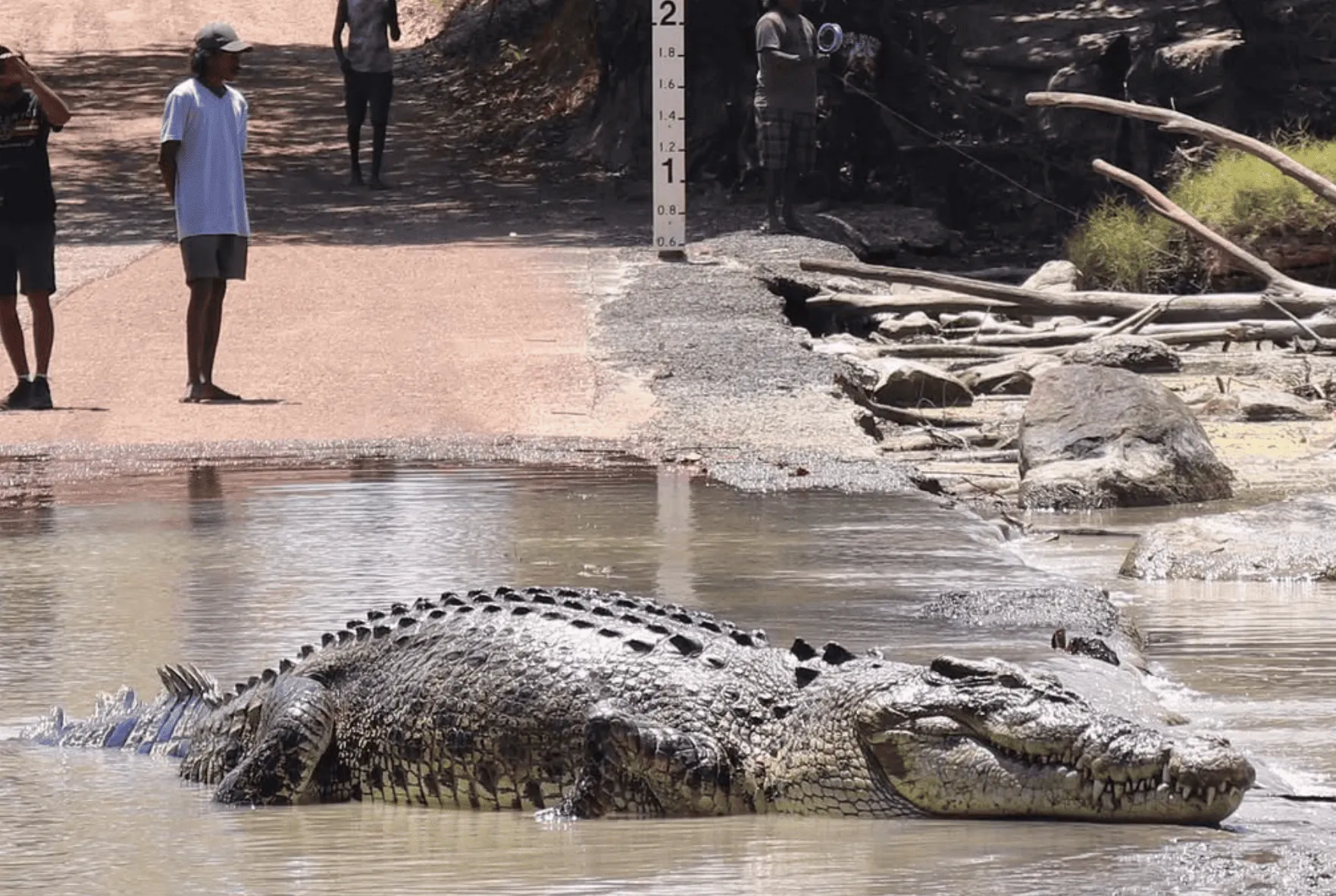
The East Alligator River supports one of the highest densities of estuarine (saltwater) crocodiles in northern Australia. As the tide surges upstream over the submerged causeway, barramundi and mullet are pushed across the shallow rock bar—creating an extraordinary natural feeding spectacle alongside Kakadu’s wetlands birdlife.
For another unforgettable up-close reptile encounter in the Top End, travellers often pair Kakadu with a Darwin jumping crocodile cruise on the Adelaide River.
Abundance of Saltwater Crocodiles
Massive crocodiles—some exceeding 4.5 to 5 metres in length—gather below and along the causeway thanks to two key ecological factors:
- High Nutrient Availability: Tidal movements funnel large schools of fish through the narrow rock-bar bottleneck, offering an energy-rich food source.
- Ideal Brackish Habitat: Warm, nutrient-rich estuarine waters and muddy basking banks create prime territory for apex predators.
Safe Croc Spotting & Viewing Platforms
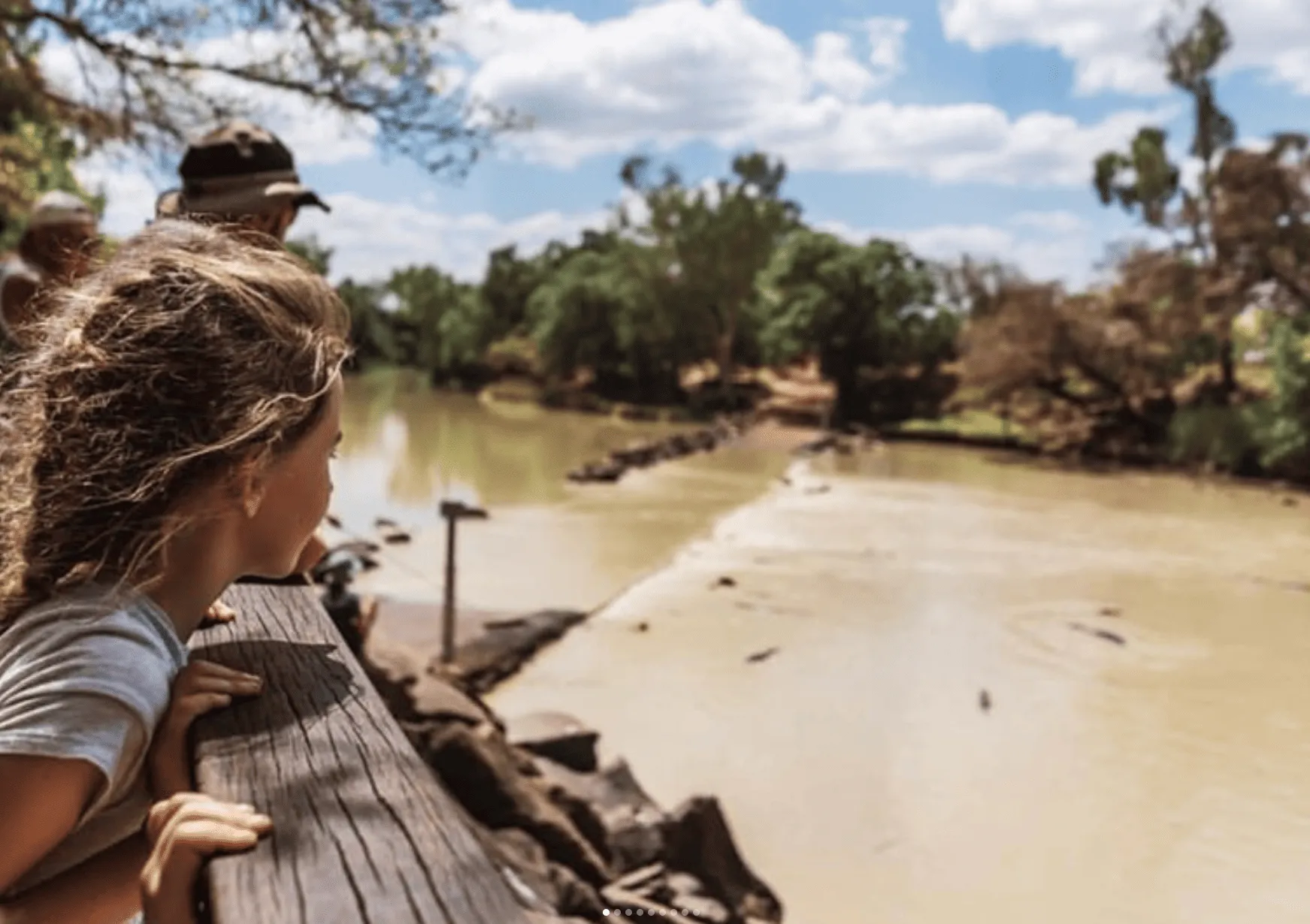
Observing crocodiles from the elevated Cahills Crossing Viewing Platform on the Kakadu (western) bank offers an unforgettable wildlife experience—provided strict croc-wise safety rules are followed:
- Tidal Times: Crocodile activity peaks on the incoming high tide when fish wash over the causeway.
- Stay Well Back From the Water: Never walk onto the causeway on foot, never stand near the river’s edge, and obey all Parks Australia warning signs.
Cultural Life & Indigenous Significance
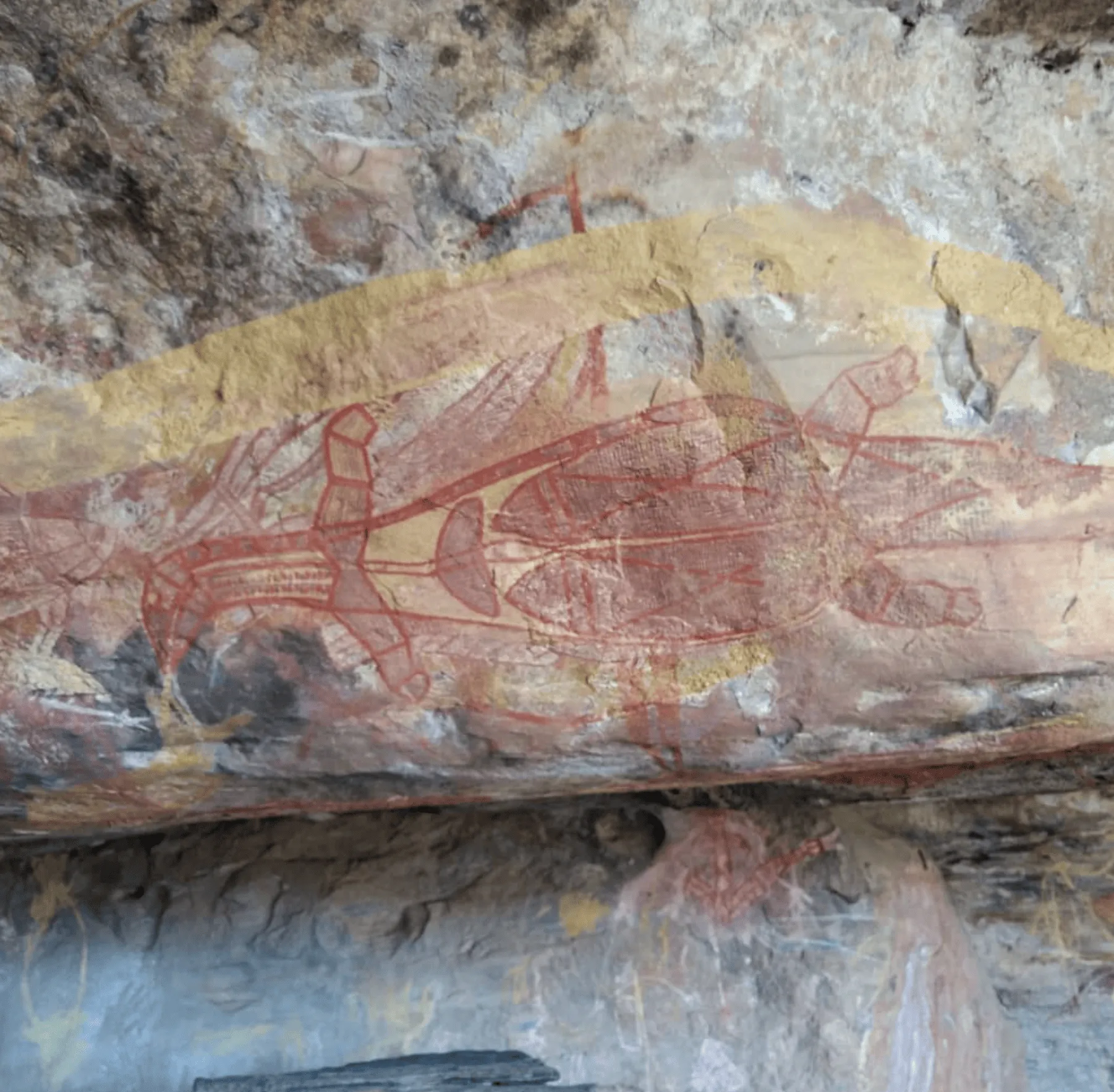
Beyond its reputation as a river crossing and wildlife hotspot, Cahills Crossing sits at the heart of living Bininj/Mungguy culture. Stories, songlines, and traditional fishing practices connect local families to the East Alligator River across countless generations.
Just minutes away, the world-renowned rock art galleries at Ubirr and the Guluyambi Cultural Cruise share deeper insights into Aboriginal law, seasonal knowledge, and respect for Country.
The Best Time to Visit Cahills Crossing
The dry season (May to October) is the safest and most rewarding time to visit Cahills Crossing, when predictable low tides allow 4WD vehicles with permits to cross into Arnhem Land and receding waters concentrate wildlife along the river.
- Dry Season & Run-Off (May–October): Lower baseline river levels create clear viewing conditions from the platform and dramatic tide-change feeding events.
- Wet Season (November–April): Heavy monsoonal rains submerge the causeway under fast, deep floodwaters, closing the road crossing into Arnhem Land while transforming surrounding floodplains into lush green wetlands.
How to Get There
Cahills Crossing lies roughly 300 km east of Darwin (about a 3 to 3.5-hour drive via the Arnhem Highway and Oenpelli Road, or 45 minutes northeast of Jabiru).
- Dry Season Access: Sealed roads reach the Kakadu-side viewing area in a 2WD vehicle, while crossing the river into Arnhem Land requires a high-clearance 4WD, low tide, and an approved Northern Land Council (NLC) permit.
- Guided Top End Tours: Explore Kakadu’s highlights stress-free on our 4-day Kakadu tours from Darwin, our 3-day 4WD Kakadu and Litchfield camping tour, or our 5-day Kakadu, Litchfield and Katherine Gorge tour.
Respecting Nature & Culture at Cahills Crossing
Standing at the meeting point of Kakadu’s floodplains and Arnhem Land’s stone country, Cahills Crossing captures the raw power and ancient heritage of Australia’s Top End. Observing from designated viewing areas, checking tide charts before any 4WD crossing, and respecting Bininj/Mungguy Country ensure this remarkable place stays safe and unforgettable—discover more things to do in Kakadu National Park.
Cahills Crossing — Frequently Asked Questions
Is Cahills Crossing suitable for children?
Yes, provided children remain closely supervised at all times inside the fenced Cahills Crossing Viewing Platform area and are kept well away from the riverbank and causeway.
Can I camp near Cahills Crossing?
Yes—Merl Campground (managed by Parks Australia near Ubirr) sits just a few minutes’ drive away; read our guide to paid and free camping in Kakadu National Park for facilities and seasonal opening dates.
What is Cahills Crossing?
Cahills Crossing is a tidal concrete causeway across the East Alligator River connecting Kakadu National Park and Arnhem Land, famous for strong tidal currents and dense populations of saltwater crocodiles.
How do you safely cross Cahills Crossing?
Only attempt to drive across in a high-clearance 4WD at low tide during the dry season with a valid Arnhem Land permit, check water depth markers first, never cross on foot, and never enter the water during high tides or flood closures.
When can you cross Cahills Crossing?
Vehicle crossings into Arnhem Land are generally possible during the May to October dry season around low tide when water depth over the causeway is low and road conditions are open.
Experience Kakadu, East Alligator & the Top End
Join our small-group guided tours from Darwin to discover Kakadu’s crocodiles, wetlands, rock art, and waterfalls.